

How to Remove Tree Stump Near Gas Line
Bob and Ben - The Tree Men
Tree stump removal is rarely simple. Place a gas line nearby and the situation changes completely. What could have been a routine weekend project now carries real risk.
Gas lines demand caution, planning, and respect for safety protocols. A single careless cut or deep dig can damage the line and create a serious hazard. Because of that, stump removal in these conditions is less about brute force and more about careful preparation.
Before any shovel breaks ground or any saw touches wood, it is essential to understand the risks, the safe methods available, and when it is smarter to bring in professionals. This guide outlines what you need to know first, so the job is done safely and correctly.
Why This Is More Serious Than a Standard Stump Job
Underground gas lines are not always where you expect them to be. While they are generally buried between 45 and 75 centimetres deep, this depth can vary depending on when the line was laid, the terrain, and any previous excavation work in the area. Tree roots, meanwhile, don't respect boundaries. They follow moisture, exploit existing cracks in underground pipes, and can grow much deeper and wider than the tree's canopy suggests.
This combination creates real risk. Using heavy machinery near a gas line can rupture shallow pipes. Exposed roots that have grown around or alongside a gas line may be physically anchored to it, or may have blocked access to the pipe entirely, meaning that pulling or grinding without proper assessment could cause a rupture. A gas leak in an enclosed or semi-enclosed space can escalate quickly into an explosion risk. And when that does happen, the consequences are severe.
Neglecting to identify underground utilities before stump removal is one of the more common causes of serious accidents in the industry. It's not something to approach casually.
Step One: Locate the Gas Line Before You Do Anything Else
The single most important step before any work begins is identifying the exact location and depth of the gas line on your property. Do not assume. Do not guess based on where the gas meter is located.
In Australia, you can contact Before You Dig Australia (1100 or via their website) to request a free search of underground utilities in your area. This service coordinates with utility companies to give you information on what's buried and roughly where. It's free, it's straightforward, and skipping it is not worth the risk.
A visual site inspection is also a sensible first step. Look for signs of previous excavation, markers, uneven ground, or changes in ground level that might indicate where pipes have been laid. Professional arborists and contractors use utility detection technology, including ground-penetrating radar, to locate underground services with greater accuracy before starting any tree stump work.
Once the gas line is located, mark it clearly on the surface. This step is crucial. Everything that follows depends on knowing exactly where it is.
Assess the Root System and Its Proximity to the Line
With the gas line located, the next step is understanding what you're dealing with above and below ground. The size of the stump gives some indication of how far the tree roots extend, but not always. Some species, particularly natives common in Australian gardens and bush-adjacent properties, have extensive root systems that spread aggressively well beyond the stump's visible footprint.
For stumps located close to a gas line, if roots have grown into proximity with the pipe or may have wrapped around it, standard stump grinding carries real risk. This is the point at which most homeowners should seriously consider calling a professional rather than proceeding independently.
Safe Removal Methods: What Your Options Actually Are
There are three primary approaches to stump removal near a gas line. Each has different risk profiles.
Manual Excavation
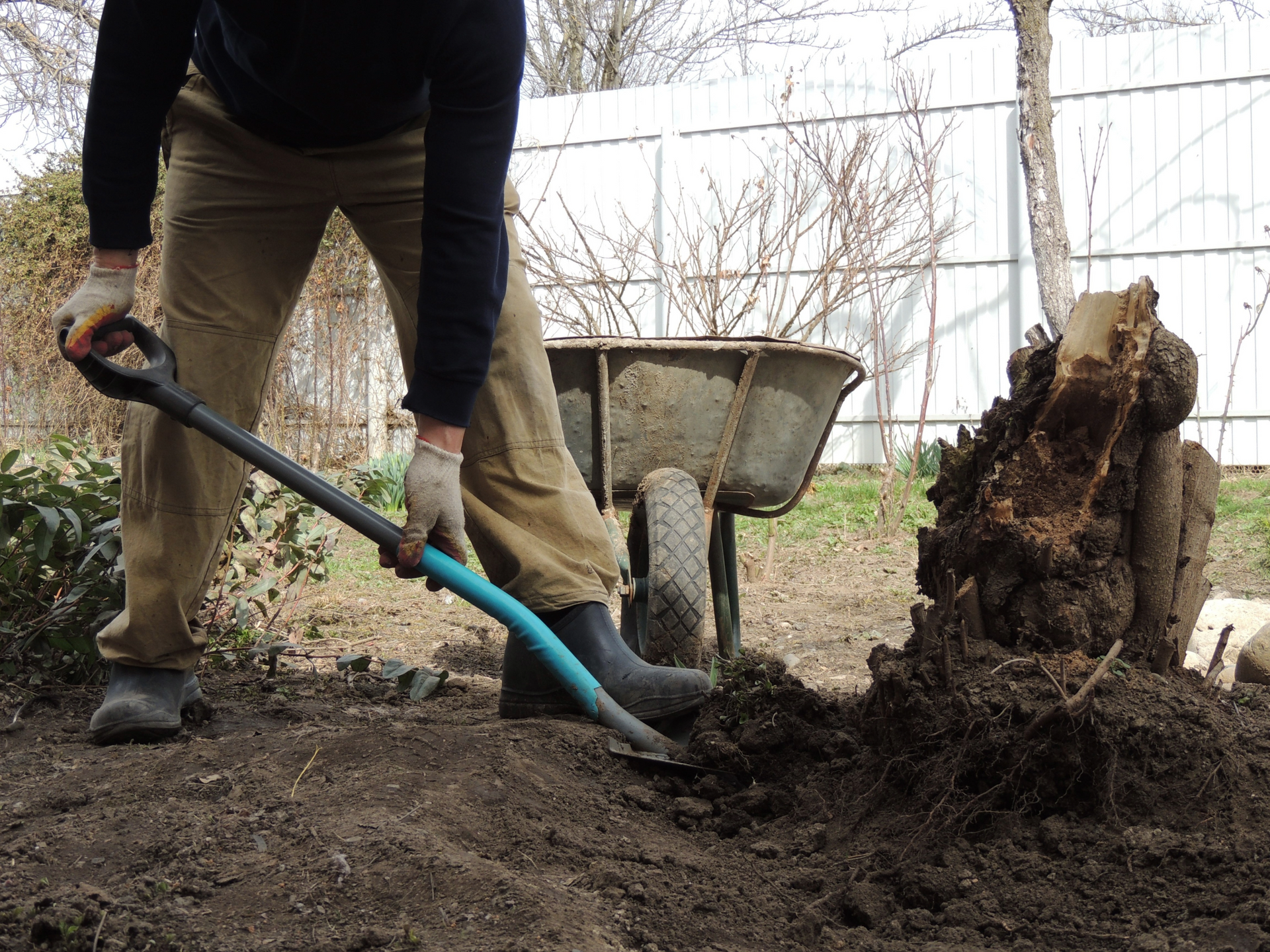
Manual removal involves physically digging out the stump and root system using hand tools: spades, mattocks, root saws, and loppers. It's labour-intensive, but it gives you direct control and visibility throughout the process. When working near a marked gas line, manual digging is the preferred approach for exposing roots, since it avoids the force and vibration of powered machinery. The key rule here is straightforward: do not use heavy tools directly over a marked gas line. Work carefully and methodically, exposing roots before cutting them back toward the main stump.
Manual removal is most practical for smaller tree stumps. For large or deeply rooted stumps, it may not be feasible without professional equipment and expertise.
Stump Grinding
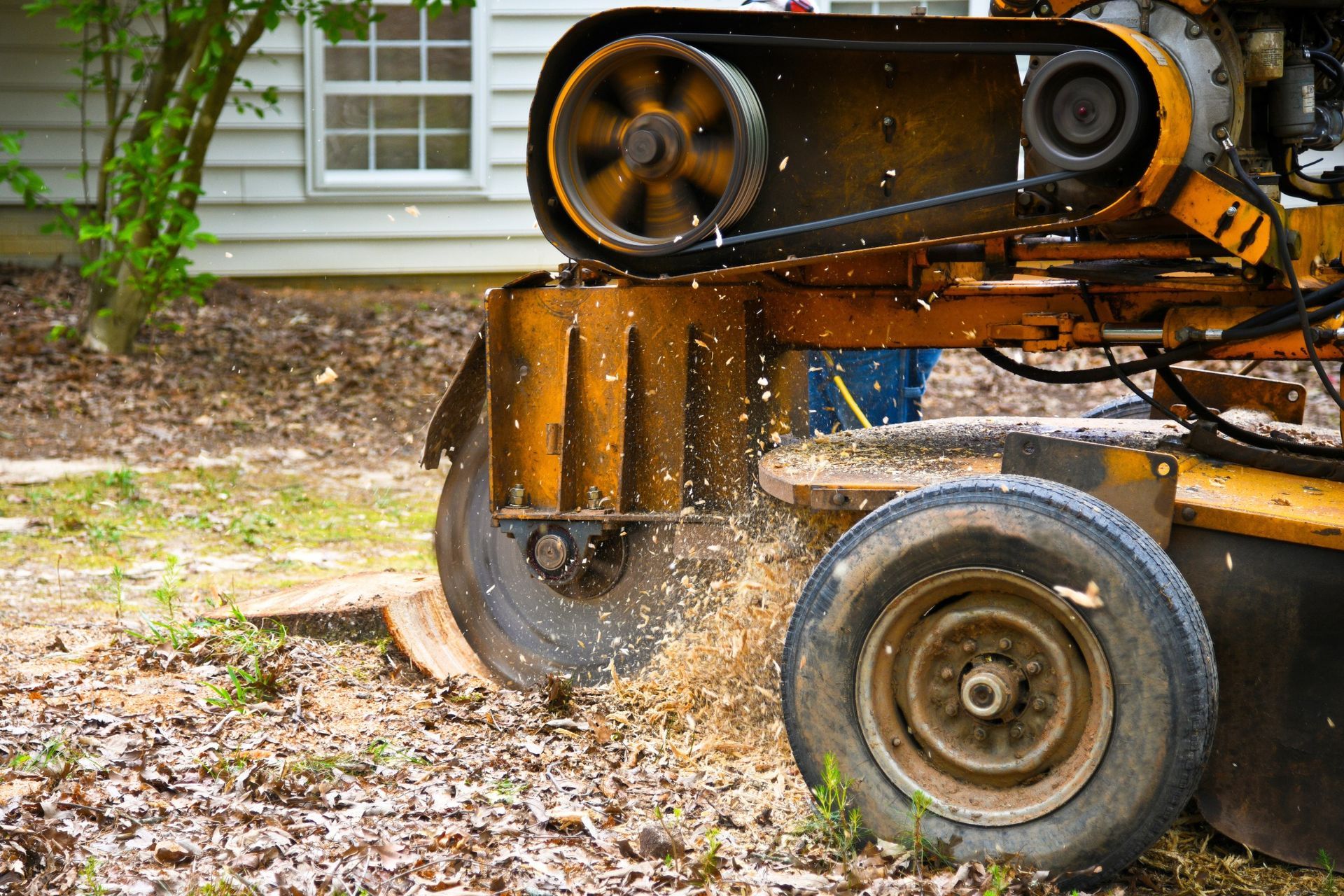
Stump grinding is the most efficient method for removing large stumps, and it's the standard approach used by professional arborists. A stump grinder uses a rotating cutting wheel to reduce the stump to wood chips below ground level.
The risk near a gas line lies in the machine's depth and proximity. Consumer-grade stump grinders lack the precise controls and safety features of professional equipment, and DIY stump grinding can lead to severe injuries even in straightforward conditions. Near a gas line, the risks are compounded significantly. Flying debris, including rocks and wood splinters thrown from the cutting wheel, can cause serious eye and skin injuries, and the noise levels involved require hearing protection at minimum.
If stump grinding is the right approach for your situation, it should be carried out by a qualified professional with professional stump grinding equipment, who has located all utilities beforehand and can control the depth and direction of the grind accurately.
Chemical Decomposition
Chemical stump removal involves drilling holes into the stump and filling them with a high-nitrogen or potassium nitrate-based stump remover to accelerate the natural rotting process. Over weeks to months, the stump softens and can be broken apart and removed.
This method carries the least immediate risk near a gas line, since it involves no heavy machinery or aggressive digging. However, it is slow, typically taking several months to produce results. And it requires follow-up manual removal of the softened material, which can be broken into manageable pieces and cleared away. It also won't suit every situation, particularly where the stump is large, where roots have grown extensively through the soil, or where local regulations prohibit any attempt to burn the softened material as part of disposal.
It can be a practical option for a property owner who is cautious about the gas line and not in a hurry, but for most scenarios, a professional assessment will give you a clearer picture of what's actually needed.
What to Do If Something Goes Wrong
If at any point during stump removal near a gas line you smell gas, hear a hissing sound, or notice any disruption to the ground around where the line is marked, stop work immediately. Move everyone away from the area to protect yourself and others, do not use any electrical equipment or open flames, and call your gas provider's emergency line. In an emergency, call 000.
This is not an overreaction. Gas leaks from ruptured lines can accumulate quickly, particularly in confined or low-lying areas. Acting fast is the right response.
One additional caution worth noting: never use a vehicle, rope, or winch to pull a stump near a gas line. If roots have grown around the pipe, the force required to extract the stump could pull the gas line with it.
Restoring the Area After Removal
Once the stump is out, the job isn't finished. Fill any holes or trenches carefully, compacting the soil to prevent subsidence. Wood chip material from the removal can be set aside to compost rather than going to landfill. Clear the work area of all debris and check that the gas line and any other underground utilities are intact. If you have any doubt about the condition of the line following the work, contact your gas company to arrange an inspection before considering the job done.
Old stumps that have sat for some time can also attract pests. Termites in particular are drawn to decaying timber and can spread to nearby structures if the stump is left unaddressed. Getting rid of the stump promptly and completely is the better long-term outcome.
If you're replanting the area, check with your gas provider about any restrictions on planting near the line's easement, as tree roots from new plantings could create the same problem further down the track.
When You Should Call a Professional
Honestly? For most people, the answer is before you start.
Stump removal near a gas line, or where there are multiple stumps in the vicinity of underground utilities, is one of those jobs where the consequences of getting it wrong are severe enough to make professional help the clear default, not the last resort. A qualified arborist will locate underground utilities with the right equipment, assess the root system's interaction with the line, choose the safest removal method for the specific situation, and carry out the work with machinery and expertise that's simply not available to most homeowners.
The cost of a professional stump removal is modest compared to the cost of a gas line repair. Let alone the consequences of a more serious incident.
Let Bob & Ben The Tree Men Handle Your Tree Stump Removal
Bob & Ben The Tree Men have been working in and around residential properties for over 25 years. Stump grinding and stump removal near utilities is exactly the kind of job we approach with proper preparation: utility identification, a thorough site assessment, and the right equipment for the conditions. We don't cut corners on safety, and we'll give you a straight answer on the best approach for your specific situation before any work begins.
If you've got a stump that's close to a gas line and you're not sure where to start, get in touch. We'll take a look and walk you through the options.
Over 25 years ago, Bob and Ben planted the seeds of what would become one of the most popular and trusted tree service businesses in the Sutherland Shire.
Get your FREE tree lopping quote today!
Let Bob and Ben The Tree Men get to the root of all your tree problems. Contact us today to receive your personalised quote.